

10-Minute Story Protocol for Bedtime Resistance
A calm, repeatable bedtime story routine to help children transition from play mode to sleep mode in just 10 minutes.
Bedtime resistance often follows the same pattern in many homes: play is hard to stop, energy does not drop quickly, and bedtime turns into negotiation.
In most cases, the core issue is not “refusing sleep,” but difficulty transitioning from a high-stimulation state to a calm one. A short, well-designed routine can make this transition much easier.
In this article, you will find a practical 10-minute story protocol you can apply tonight. The goal is not perfect storytelling. The goal is a consistent, calm bedtime rhythm.
Short Summary
Bedtime resistance is often less about refusing sleep and more about struggling to transition from stimulation to calm. This 10-minute story protocol helps parents create a predictable wind-down routine using low stimulation, personalized storytelling, calm pacing, and a safe closing line. With consistency, bedtime can become smoother, calmer, and less filled with negotiation.
Why This Protocol Works
Fast, high-intensity stimulation before sleep — such as bright screens, rapid pacing, or emotionally intense content — can make it harder for children to settle. That is why the pre-bed environment and media choices matter.
Compared with passive media consumption, interactive shared reading with a parent is linked to stronger outcomes in language development, attention, and connection. Bedtime quality is not only about duration, but also about the type of interaction.
Consistency is what makes routines effective. Repeating the same sequence each night creates a reliable wind-down signal for the child’s body and mind. Within days, resistance typically starts to decrease.
The 10-Minute Bedtime Flow
Minute 0–2: Lower Stimulation
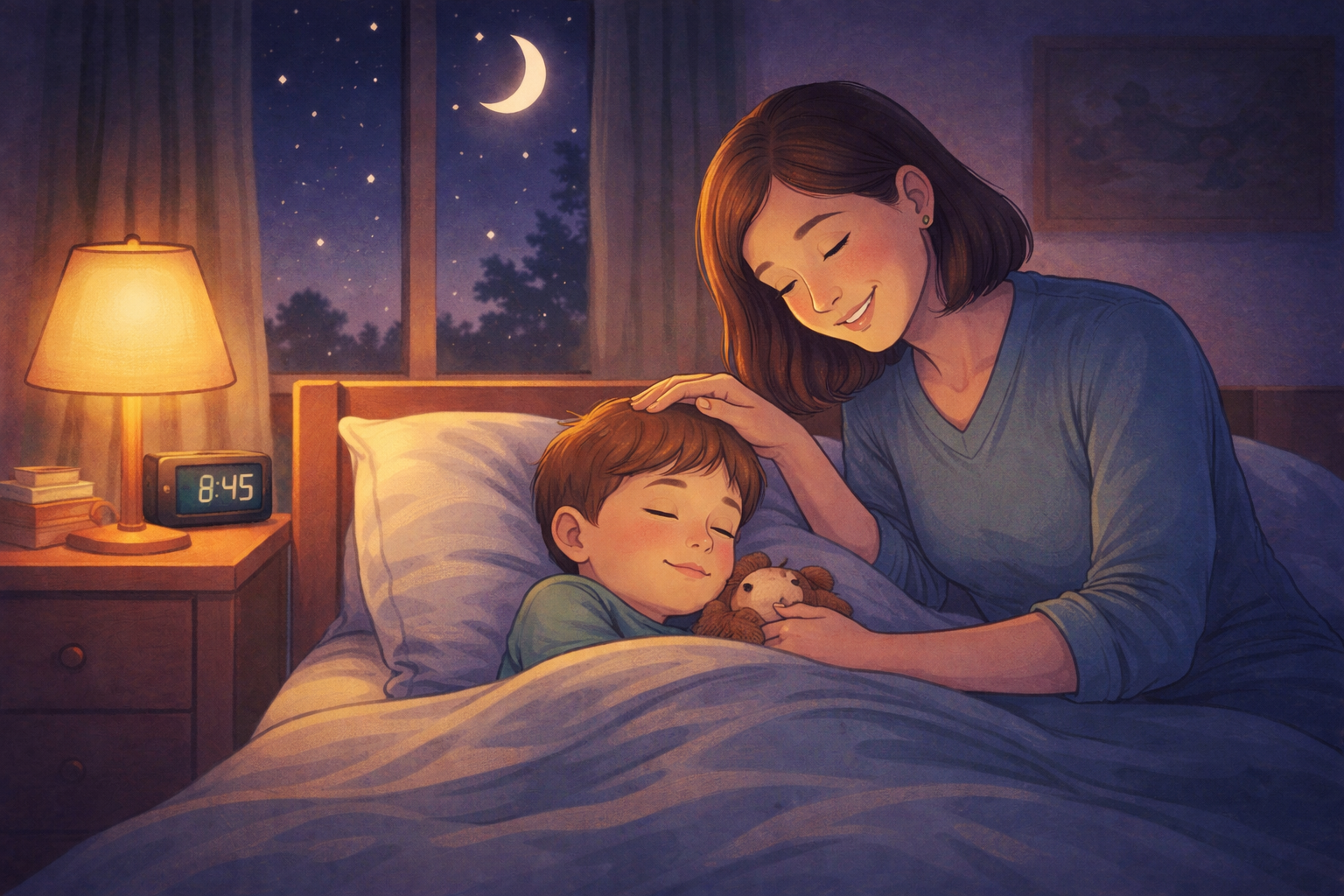
Dim the lights, reduce noise, and remove fast stimuli.
Goal: Send a clear “the day is closing” signal.
Minute 2–5: Personalized Story Start
Use your child’s name, one small event from the day, and a familiar favorite theme.
For example:
“Tonight, Leo and his little moon-dragon remembered the big puddle they saw after lunch…”
Goal: Replace resistance with curiosity and emotional safety.
Minute 5–8: Calm Narrative Phase
Use short sentences, slow pacing, and a gentle tone.
A small challenge can appear in the story, but keep the emotional intensity low and the resolution reassuring.
Goal: Move the mind from activation to regulation.
Minute 8–10: Safe Closing
End with a predictable closing line, such as:
“That’s today’s story. We continue tomorrow.”
Goal: Reduce uncertainty and leave a soft bridge to the next night.
How to Apply This With Lume
In Lume, keep the same bedtime structure each night and only change the key inputs:
- Name
- Interests
- Theme
- Emotional tone
This gives your child novelty in the story while preserving consistency in the bedtime routine.
Practical Setup
- Choose a low-arousal bedtime theme
- Keep the story length short to medium
- Use calm and simple language
- End with the same repeated closing sentence
A Mini Plan for Tonight
Do not aim for a long story. Aim for a consistent transition.
- Keep the routine within 10 minutes.
- Use the same sequence every night.
- Repeat it for at least 7 nights.
- Keep the ending predictable and calm.
In many families, negotiation time starts to shorten within the first week, and bedtime transitions become smoother with less tension.
Small consistency creates meaningful change.
References and Sources
The information in this article is based on reports from trusted pediatric and child development organizations, along with peer-reviewed academic research.