Why Does My Child Ask "Why" a Million Times?
Children do not ask “why” to exhaust parents. They ask because they are building a model of the world. This article explores why endless questions matter, how curiosity supports child development, and how stories can help keep that curiosity alive.
There are days when you count. You don’t mean to, but you do.
Why is the sky blue? Why do we have to eat vegetables? Why does the dog not talk? Why did you say that? Why? Why? Why?
By the fourteenth “why” before breakfast, something in you quietly snaps. You give an answer — a real, thoughtful, honest answer — and before the last word leaves your mouth, the next one is already coming.
But why?
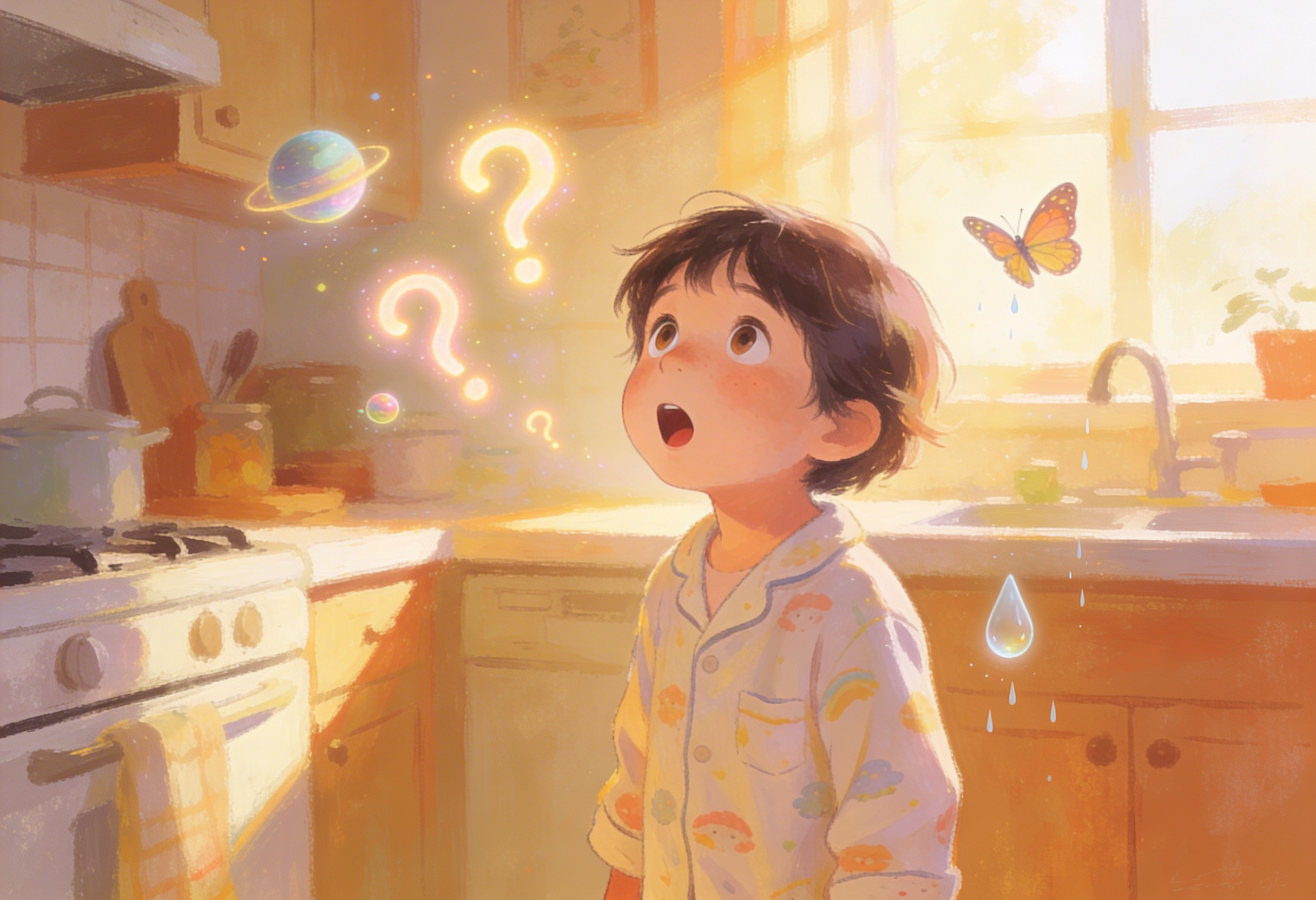
If you’ve ever stood in your kitchen at 7am, explaining the water cycle to a four-year-old who is still in their pajamas and shows absolutely no signs of running out of questions, this one is for you.
First, the News You Actually Needed to Hear
Your child is not trying to exhaust you. They are not being difficult. They are not even particularly interested in your answers, at least not in the way you think.
What they are doing is something far more extraordinary.
They are building a model of the world.
Every “why” is a test. A small hypothesis. Your child has noticed something that doesn’t yet fit into what they know, and they are reaching out to close the gap.
The question isn’t really about the sky or the vegetables or the dog.
The question is always the same underneath:
How does this place work, and where do I fit in it?
Researchers who study early childhood cognition call this period the “causal reasoning explosion.”
Somewhere between ages three and five, children don’t just want to know what things are. They need to know why things are.
It’s the same cognitive leap that eventually produces scientists, writers, engineers, and every person who has ever looked at something ordinary and decided to understand it more deeply.
Your child is not annoying.
Your child is a philosopher in pajamas.
Why the Answer Almost Doesn’t Matter
Here’s the part that might actually change how you feel about the next round of questions.
Studies on children’s “why” behavior have found something surprising: children often continue asking even when they receive a perfectly satisfying answer.
This confused researchers for a while.
Were they not listening?
Did they not understand?
Neither.
They were practicing.
The act of asking — the reaching, the wondering, the not-yet-knowing — turns out to be as developmentally important as the answer itself.
A child who asks “why” is a child who has learned that the world is knowable.
That questions lead somewhere.
That curiosity is not just allowed but rewarded.
That belief, built question by question across thousands of small morning conversations, is one of the most protective things a child can carry into their life.
What Happens When the Questions Stop
This is the part that doesn’t get talked about nearly enough.
Children naturally ask fewer questions as they get older. Some of this is normal — they know more, so there’s less to ask.
But research suggests that children who grow up in environments where questions are consistently shut down, rushed past, or met with frustration learn something too.
They learn that wondering is inconvenient.
That not-knowing is something to hide rather than something to explore.
The “why” phase doesn’t last forever.
And the way it ends matters.
What You Can Actually Do on the Hard Mornings
You don’t have to answer every question fully.
You really don’t.
What matters far more than the accuracy of your answer is the texture of how you receive the question.
A simple:
“That’s such a good question, I wonder too.”
does more than a perfect explanation delivered through gritted teeth.
Saying:
“I don’t know, what do you think?”
hands the curiosity back to them in the best possible way.
And occasionally following a chain of “whys” all the way to the edge of what either of you knows — arriving together at genuine mystery — is one of the stranger and more beautiful things about being a parent.
You’re not a search engine.
You’re a thinking partner.
The questions are how they invite you in.
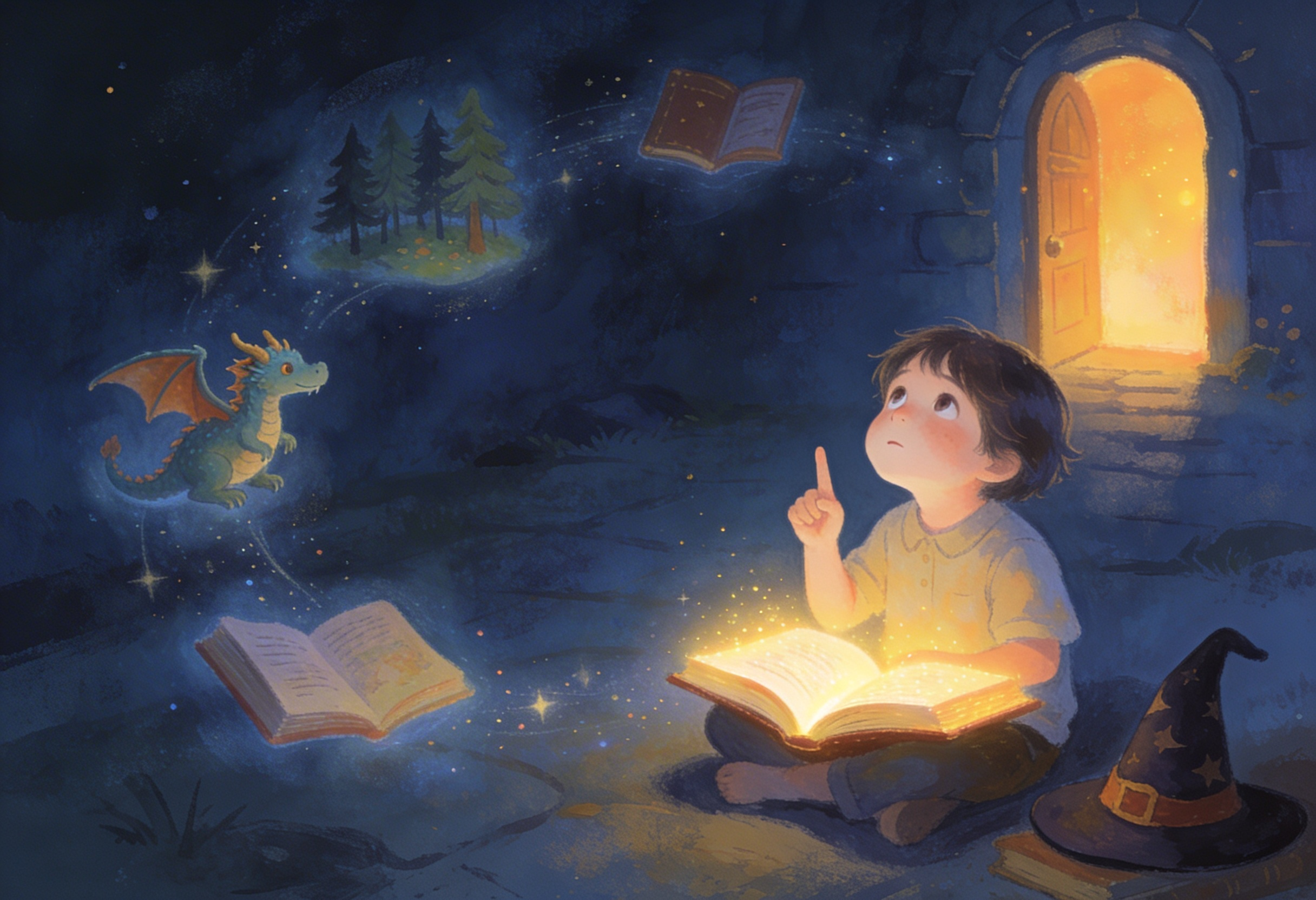
The Story Connection
There’s a reason children who are raised on stories tend to ask more questions, not fewer.
A good story doesn’t just give answers.
It generates new questions.
It opens doors that weren’t visible before.
It makes the world feel larger and more worth understanding.
When your child asks why the dragon didn’t just fly away, or why the princess went back into the forest, or what the old wizard was thinking — that’s the same muscle.
The same reaching.
The same beautiful refusal to accept the world as simply given.
Feed it however you can.
At Lume, every story is built to leave questions open. Because a child who finishes a story wondering what happens next is a child whose imagination is still working.
And that’s exactly where we want them.
Download Lume from the App Store and give your child a story worth wondering about.
🚀 Download "Lume: Bedtime & Kids Stories" here: https://apps.apple.com/app/apple-store/id6743057850?pt=127544751&ct=lumestory_blog&mt=8