
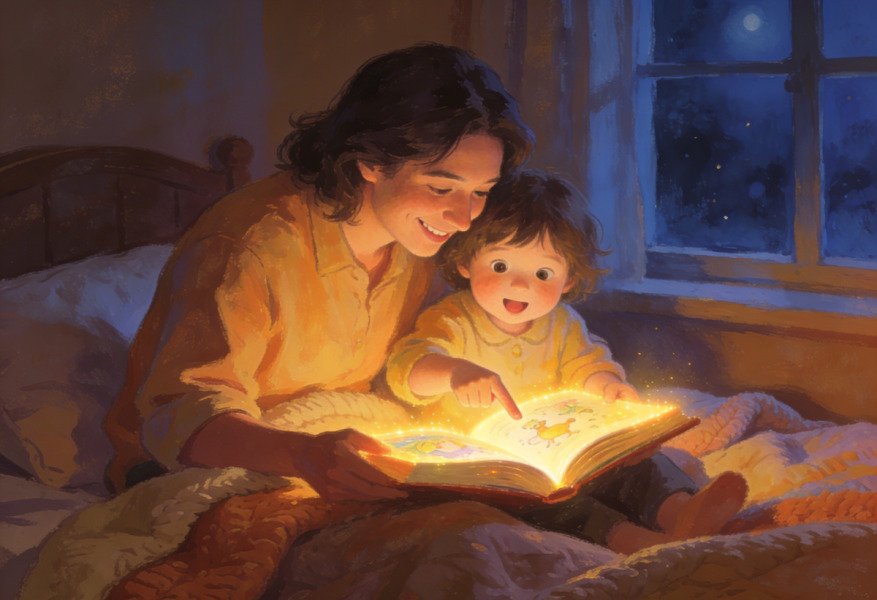
Why Does Your Child Say "One More Story"? The Hidden Power of Imagination
That tiny bedtime request may be more than a delay tactic. It may be your child asking for connection, imagination, and emotional safety.
Every parent knows that moment. The lights are out, the blanket is pulled up, and just as you reach the door handle, you hear it:
“One more story. Please.”
No matter how tired you are, that small voice is almost impossible to say no to. And maybe it shouldn’t be. Because your child isn’t stalling bedtime. They’re asking for something they genuinely need.
Your Child’s Imagination Is Not a Phase. It’s a Foundation.
Most of us think of imagination as something children naturally have, like baby teeth or boundless energy. Something that belongs to childhood and eventually gives way to more serious things.
But research tells a different story.
A child’s ability to build, follow, and inhabit a narrative turns out to be one of the strongest predictors of their emotional and cognitive development. Not just how well they’ll read someday. How well they’ll think, connect, and problem-solve when life doesn’t come with a script.
When your child worries about whether the hero will make it, that’s emotional regulation in practice.
When they ask:
“But why did she do that?”
Empathy is activating.
When they start guessing what happens next before you turn the page, that’s creative reasoning taking shape. The same kind of thinking that will one day help them navigate situations no one has written an answer to yet.
The story is never just a story.
Imagination Needs Fuel. And Not All Fuel Is Equal.
Here’s something that doesn’t come up often enough: imagination isn’t self-sustaining. It needs to be exercised.
Children who grow up with rich, varied, and personally meaningful stories develop stronger imaginative capacity than children who mostly consume. Not because one group is smarter, but because imagination responds to use.
Like any cognitive skill, it grows when it’s asked to work.
And this is where modern childhood gets complicated.
There is more content available to children today than at any point in human history. But volume isn’t the same as nourishment.
A child who spends an hour watching pre-packaged stories where every character, every twist, every outcome is already decided for them is having a very different neurological experience than a child who wonders, even for a moment:
What would I have done?
That wondering is where imagination lives.
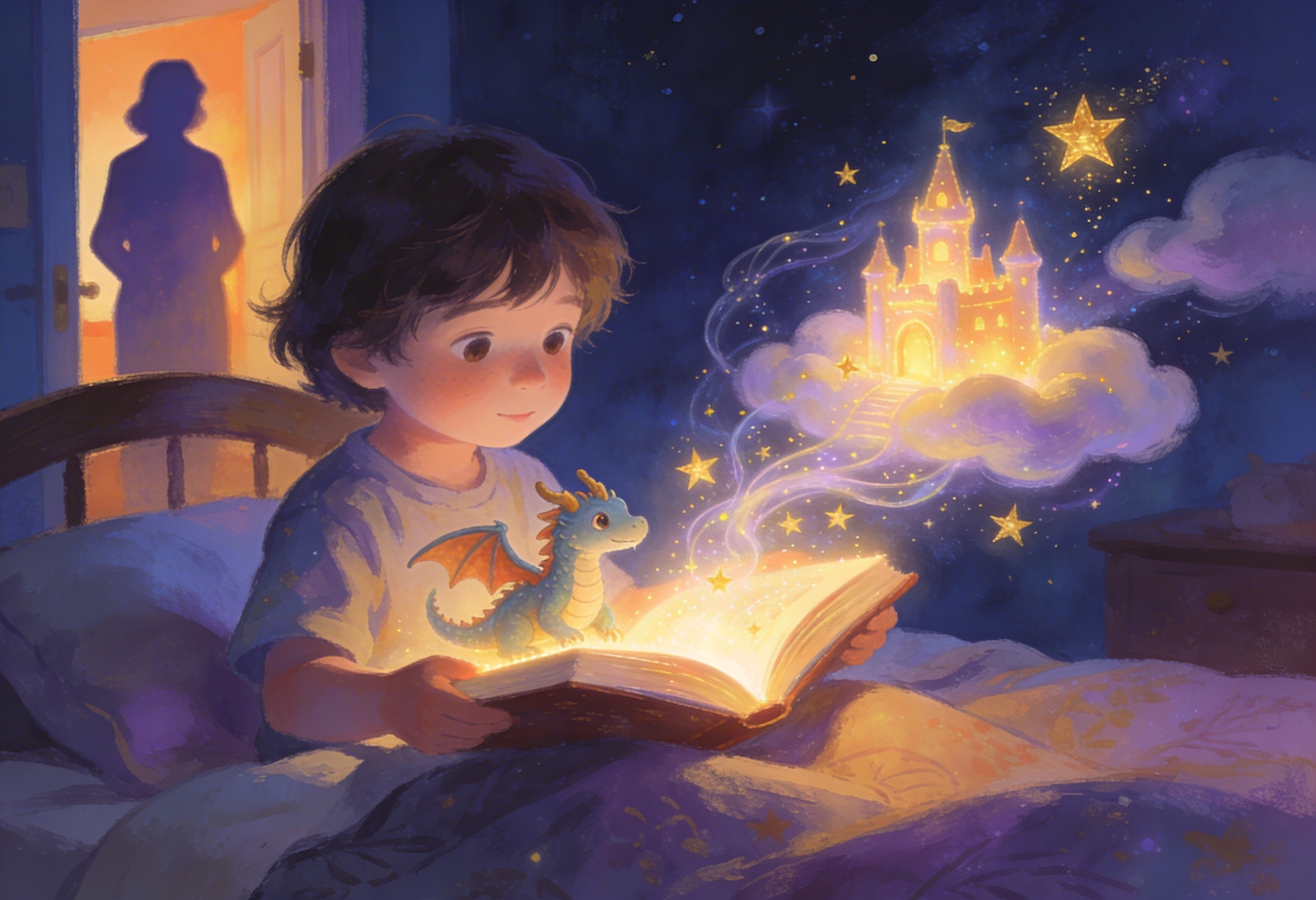
The Reason “Tell Me a Story About Me” Is Never Really About Ego
There’s a well-documented phenomenon in learning science called the Self-Reference Effect.
Simply put: we engage with, process, and remember things that feel personally relevant to us far more deeply than things that don’t.
When a child hears their own name in a story, when the hero shares their face and their fears, when their choices actually shape what happens next, something shifts.
The brain stops processing the experience as entertainment and starts processing it as something real.
The emotions land differently.
The lessons stick.
Your child asking to be in the story isn’t vanity. It’s instinct. They know, without being able to say it, that this is the kind of story that will actually reach them.
What You Can Do Starting Tonight
You don’t need a new routine or a complicated plan. The smallest habits tend to have the longest reach.
After the story ends, ask what your child thinks happens next.
Let them make choices that steer the plot.
Pause mid-chapter and ask what they imagine is behind that door.
Whatever they answer, no matter how strange or unexpected, take it seriously.
In their world, it’s true.
And when imagination produces something wonderfully wrong?
A dragon who bakes cookies.
A princess who refuses to be rescued.
A spaceship that runs on laughter.
That’s not a mistake.
That’s a mind that has learned it’s safe to create.
The Bigger Picture
These early years are when your child is quietly building the cognitive and emotional architecture they’ll carry for the rest of their life.
Imagination isn’t a phase they’ll grow out of. It’s the foundation they’ll grow from.
A great story, told at the right moment, is one of the most powerful things you can give them.
Not because it teaches a lesson, but because it leaves a door open and lets your child decide what’s on the other side.
How Lume Helps
At Lume, we built something simple: a place where your child is always the hero.
AI-powered stories personalized to their world, safe enough for bedtime, and magical enough to make them ask for one more.
Download Lume from the App Store and give your child tonight the story they’ve been waiting for.
🚀 Download "Lume: Bedtime & Kids Stories" here: https://s.lumestory.app/arnaiAw
Related Posts
Banning Is Not the Solution: The American Academy of Pediatrics' "5C Model" for a Healthy Media Diet
Are you having trouble managing your child's screen time? Instead of strict bans and guilt, meet the American Academy of Pediatrics' (AAP) scientific "5C Model." This guide offers ways to turn technology from a passive consumption tool into an active educational tool that supports your child's brain development.
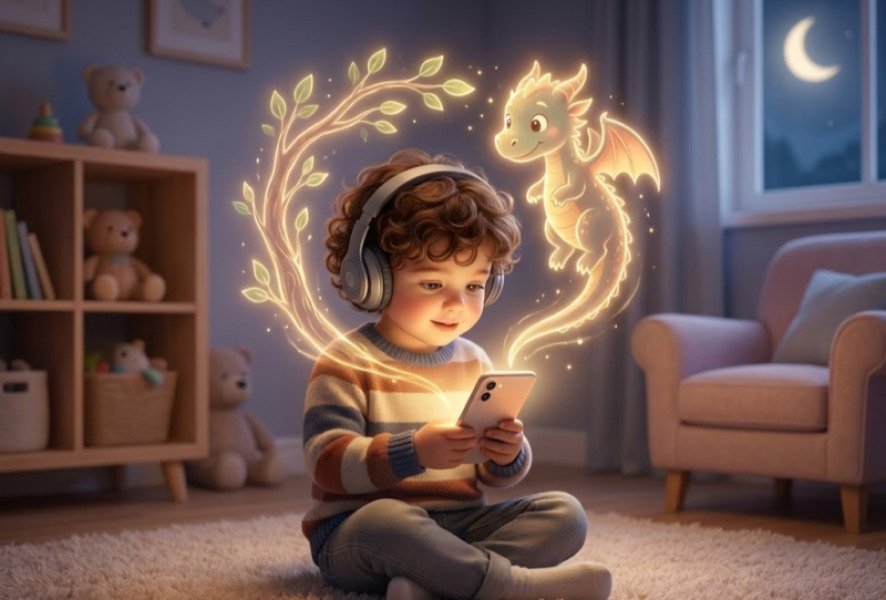
Self-Reference Effect (SRE): Accelerate Learning with Personalized Stories
Why does your child react immediately when they hear their name in a crowded place? Science calls this the "Cocktail Party Effect." Discover how you can boost your child's learning speed and memory with Lume by combining this neurological reflex with the "Self-Reference Effect" (SRE).